
 how-to
How to Stop Dog Pulling on Leash: 2026 Guide
Table of Contents
- Why Dogs Pull on the Leash (And Why It Gets Worse)
- Best Equipment for Leash Pulling: What Actually Works
- Loose Leash Walking Training Steps That Build Real Results
- Leash Pulling Training Mistakes That Set You Back
- How Long to Train a Dog to Walk on a Leash
- How to Stop Dog Pulling on Leash: Transitioning Off Training Tools
- When Professional Help Makes the Difference
- Frequently Asked Questions
Last Updated: August 30, 2026
Dog pulling on leash is one of the most common, and most misunderstood, behavioral issues dog owners face. At SLC Dog Co., we work with families across the Southwest Valley whose dogs have turned daily walks into a tug-of-war, and the pattern is almost always the same: the pulling started small, nobody addressed it, and now it's a full-body workout just to get around the block. Below, we'll walk through exactly why pulling happens, which equipment actually helps, and the step-by-step training protocol that builds lasting results. The goal isn't just to survive the walk. It's to enjoy it.
Why Dogs Pull on the Leash (And Why It Gets Worse)
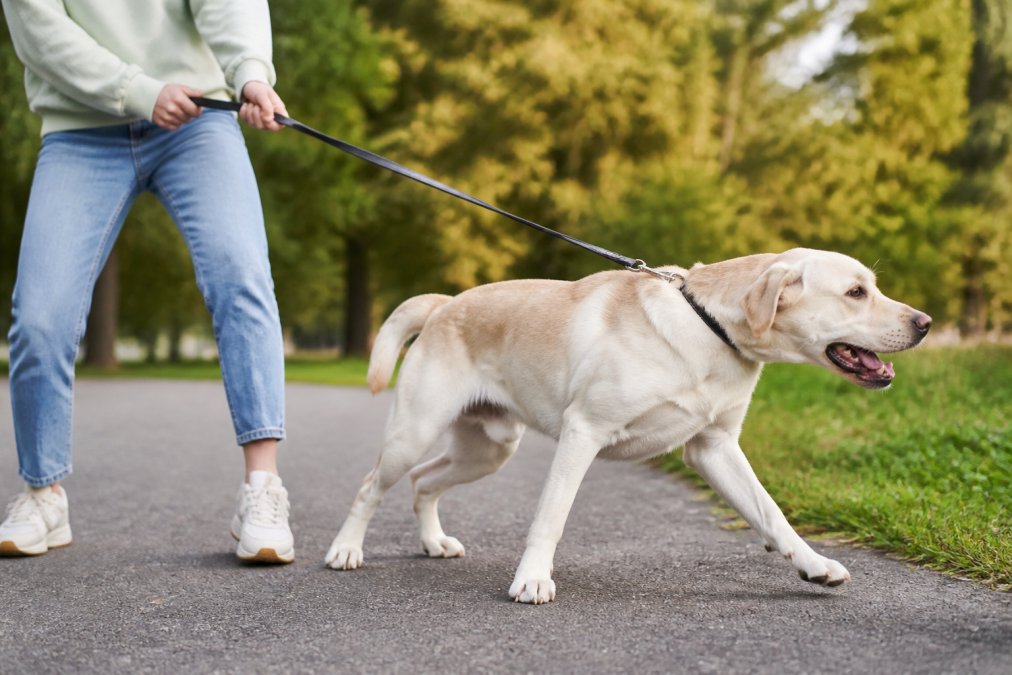
Dogs pull because it works. The moment a dog lunges toward a smell and the owner follows, the dog learns a simple lesson: tension on the leash gets me where I want to go. Repeat that a few hundred times, and you've trained the pulling yourself, unintentionally. This is why the behavior tends to escalate rather than fade on its own.
Understanding dog pulling on leash starts with recognizing that it's a self-reinforcing behavior. Every successful lunge is a repetition of the wrong lesson.
Excitement-Based vs. Frustration-Based Pulling
The two most common types of pulling feel similar but require different approaches.
Excitement-based pulling happens when a dog is highly aroused by the environment, new smells, other dogs, open space. The dog isn't anxious; it's just overwhelmed with enthusiasm and has no impulse control trained into it yet. High-value treats and engagement work well here because the dog is in a positive emotional state.
Frustration-based pulling is more serious. This occurs when a dog can see something it wants but can't reach it, another dog, a person, a squirrel, and the barrier creates reactive, escalating behavior. Leash tension actually increases frustration here, which is why standard leash corrections often make this type of pulling worse, not better. Counter-conditioning and careful distraction threshold management are the tools that actually move the needle.
Breed-Specific Pulling Behaviors to Know
Most guides treat all dogs as interchangeable. They aren't. Breed history shapes pulling behavior significantly.
Sporting breeds like German Shorthaired Pointers, like Felix, one of our training highlights at SLC Dog Co., are built for sustained forward motion and high environmental engagement. Their pulling is almost always excitement-based and requires heavy engagement training to redirect that drive toward the handler. Herding breeds like Border Collies and Australian Shepherds pull with intense focus and can fixate on moving targets. Sled breeds like Huskies and Malamutes have pulling literally bred into them over centuries, loose-leash walking requires more patience and more consistent repetition with these dogs than with most others. Bully breeds often pull out of pure enthusiasm and respond well to positive reinforcement once engagement is established.
Knowing your breed's baseline helps you set realistic timelines and choose the right training approach from the start.
Best Equipment for Leash Pulling: What Actually Works
Equipment doesn't train your dog. That's the honest truth most gear companies won't tell you. The right equipment, however, creates mechanical conditions that make training easier and reduces the physical strain on both dog and handler while the real work happens.
Front-Clip Harnesses vs. Flat Collars
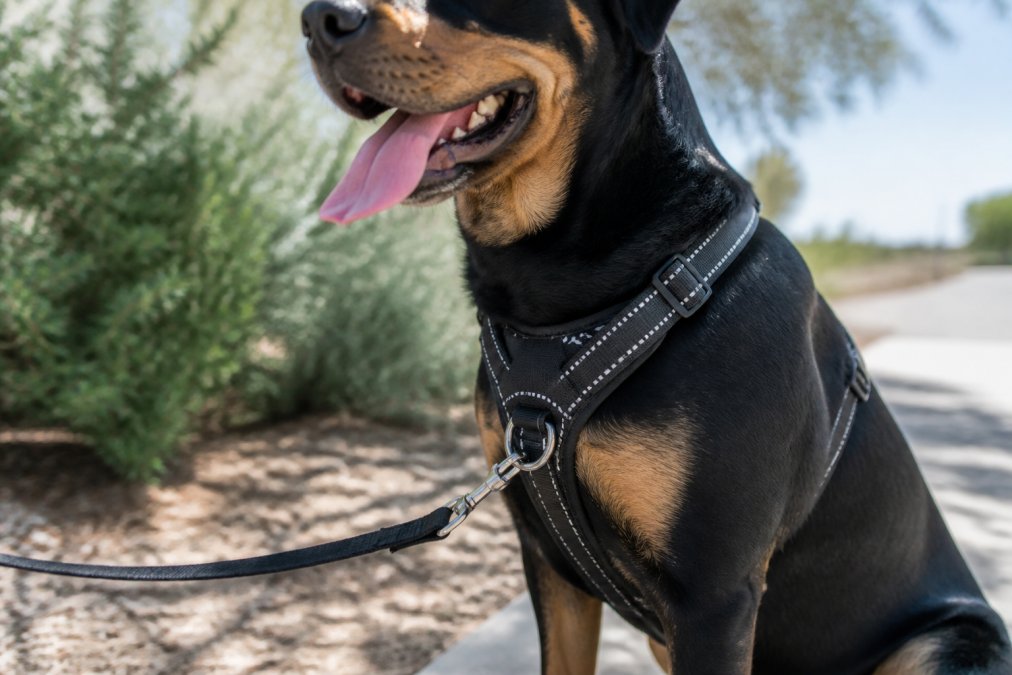
A front-clip harness is the most widely recommended tool for dogs that pull, and for good reason. When the leash clips to the chest rather than the back, a pulling dog naturally turns toward the handler rather than gaining forward momentum. This interrupts the pulling behavior without pain or correction, creating a natural redirection that pairs well with positive reinforcement training.
Flat collars are fine for dogs with solid loose-leash walking skills. For a dog actively learning, a flat collar concentrates leash pressure on the trachea and cervical spine, which creates physical risk with strong pullers and does nothing to interrupt the pulling pattern.
Back-clip harnesses are the worst choice for pulling dogs. They distribute pressure comfortably across the chest, which actually makes pulling easier, it's essentially the same design used in sled dog harnesses.
The Dangers of Prong and Chain Collars
Prong collars and chain collars are aversion-based tools that apply pain or discomfort to interrupt behavior. The American Veterinary Society of Animal Behavior position statement on aversive training is clear that aversive-based methods carry real risks: increased anxiety, redirected aggression, and damage to the human-dog relationship.
The practical problem with prong collars for leash pulling is that they address the symptom, not the cause. A dog that stops pulling because it hurts to pull hasn't learned loose-leash walking. It's learned to suppress behavior under pressure. Remove the collar, and the pulling typically returns immediately. Worse, in frustration-based pullers, the pain can intensify the reactive response over time.
Humane training takes longer upfront and produces results that actually hold.
Loose Leash Walking Training Steps That Build Real Results
Loose-leash walking is a trained skill, not a personality trait. Dogs don't come pre-loaded with it. The following steps build the behavior systematically, starting with engagement and adding complexity gradually.
Step 1: Establish Engagement Before You Move
The biggest mistake in walk training is starting the walk before you have the dog's attention. If your dog is already scanning the environment, nose down, pulling toward the gate, you've already lost.
Before stepping off the porch, practice engagement: ask the dog to make eye contact, reward it with a high-value treat, and repeat until the dog is orienting to you voluntarily. This is marker training at its most basic, you're teaching the dog that checking in with you is more rewarding than anything else in the environment. Only start walking once you have genuine engagement.
Step 2: The Stop-and-Wait Method
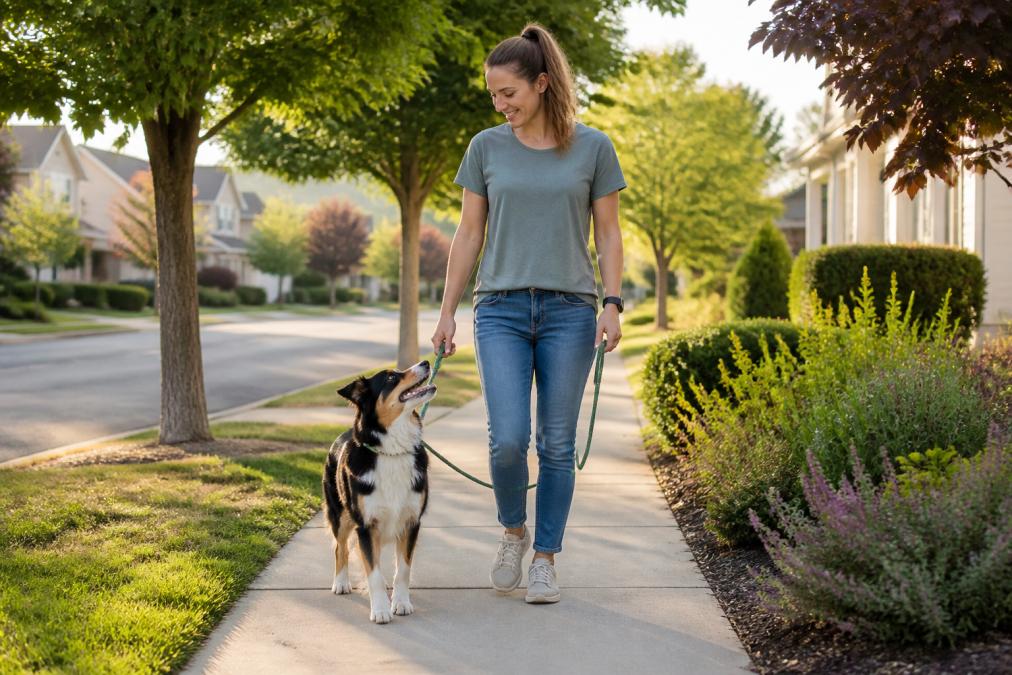
The stop-and-wait method is the foundation of loose-leash walking training. The rule is simple: forward movement only happens on a slack leash. The moment leash tension appears, stop completely. Wait. The instant the dog releases the tension, whether by stopping, sitting, or turning toward you, the walk resumes.
This method requires patience and consistency. Most dogs test it hard for the first few sessions. A common mistake is stopping but then moving forward before the leash is fully slack, which teaches the dog that a little tension is still acceptable. Hold the standard.
Step 3: Changing Direction to Regain Focus
When the stop-and-wait method isn't breaking the pulling pattern, changing direction is the next tool. The moment the dog hits the end of the leash, calmly turn 180 degrees and walk the other way. This is not a jerk or a correction, it's a calm, consistent consequence. The dog doesn't get to go where it wants, and it has to reorient to keep up.
The 180-degree turn is particularly effective for excitement-based pullers because it interrupts the forward momentum and refocuses the dog on the handler's movement. Over time, dogs learn to watch the handler's body language instead of fixating on the environment.
Step 4: Environmental Desensitization and Distraction Thresholds
Every dog has a distraction threshold, the point at which the environment becomes too stimulating for the dog to respond to cues. Training below that threshold is where learning happens. Training above it is just chaos management.
Environmental desensitization means systematically exposing the dog to distractions at a distance where it can still respond, then gradually decreasing that distance as the dog's impulse control improves. Start walks in low-stimulation areas. A quiet street before a busy park. A parking lot before a trail. Progress only when the dog is consistently successful at the current level.
According to the Association of Professional Dog Trainers' resource library, systematic exposure combined with counter-conditioning is one of the most evidence-supported approaches for reducing reactivity and pulling in real-world environments.
Leash Pulling Training Mistakes That Set You Back
| Mistake | Why It Fails | What to Do Instead |
|---|---|---|
| Moving forward with tension on the leash | Rewards pulling with forward progress | Stop completely; resume only on slack leash |
| Inconsistent rules across family members | Dog learns pulling works with some people | Align all handlers on the same protocol |
| Training only on familiar routes | Dog learns to behave in one context only | Vary environments systematically |
| Skipping engagement work | Dog enters every walk already unfocused | Practice check-ins before and during walks |
| Advancing too fast | Dog fails at harder levels, rehearses pulling | Slow progression; stay below distraction threshold |
The most damaging mistake is inconsistency. One family member who lets the dog pull undoes days of careful work. Dogs learn from every repetition, not just the ones during "training sessions."
How Long to Train a Dog to Walk on a Leash
How long it takes to train a dog to walk on a leash depends on the dog's age, breed, history of reinforcement for pulling, and training consistency. There's no universal timeline, and any guide that gives you a specific number of days is oversimplifying.
What most practitioners observe: dogs with no prior pulling history and consistent daily training show meaningful improvement within two to four weeks. Dogs with established pulling patterns, especially those with any reactivity component, typically need eight to twelve weeks of consistent work before loose-leash walking becomes reliable in moderate-distraction environments.
Walk duration matters less than walk quality. A 10-minute session with full engagement and zero pulling repetitions does more for behavior modification than a 45-minute walk where the dog pulls for most of it. Short, focused sessions beat long, chaotic ones every time.
How to Stop Dog Pulling on Leash: Transitioning Off Training Tools
The goal of any training tool, front-clip harness, long line, or otherwise, is to make itself unnecessary. A dog that only walks nicely in a specific harness hasn't learned loose-leash walking; it's just being mechanically managed.
Transitioning off training tools should happen gradually. Once the dog walks reliably on a loose leash with the front-clip harness across a variety of environments, begin introducing the flat collar for short segments of the walk. Reward generously during those segments. Gradually extend the flat collar portion as the dog demonstrates consistent behavior.
The same principle applies to treats. Reduce treat frequency gradually once the behavior is reliable, don't cut them cold turkey. Move from continuous reinforcement to intermittent reinforcement, which actually makes the behavior more durable over time, as documented in behavioral science research on reinforcement schedules.
When Professional Help Makes the Difference
Some pulling problems are straightforward. Others aren't. If your dog's pulling is accompanied by lunging, barking, or snapping at other dogs or people, that's leash reactivity, and it requires a more structured behavior modification approach than standard walk training.
A common mistake is continuing to work through reactivity with basic walk training techniques and hoping the dog will improve with time. Reactive behavior tends to intensify without targeted intervention, not resolve on its own.
This is where professional immersion training produces results. At SLC Dog Co., our board and train program places dogs in a private home setting where they receive structured, consistent training across real-world environments, not just a controlled classroom. Dogs learn heel, sit, down, and place commands with the kind of repetition and consistency that owners with full schedules simply can't replicate at home. Follow-up lessons ensure the skills transfer back to the owner.
As noted in the American Kennel Club's guidance on professional dog training, professional trainers are particularly valuable when behavioral issues involve reactivity, anxiety, or established patterns that have been reinforced over months or years.
If you've already tried multiple training approaches without lasting results, the issue usually isn't the dog. It's that the training environment, consistency, or methodology wasn't matched to the dog's specific behavioral profile.
Leash pulling is fixable, but it requires the right approach, the right equipment, and non-negotiable consistency from every person who holds the leash. If your dog's pulling has crossed into reactivity, or if you've tried training on your own and the results haven't held, SLC Dog Co.'s board and train program is built for exactly that situation. Our trainers work with your dog in a real-world environment, teaching off-leash reliability and essential obedience commands with the follow-up support to make sure the results stick. Contact SLC Dog Co. to find out how we can help.
Frequently Asked Questions
What is the #1 trick to stop your dog from pulling on the leash?
The most effective single habit is stopping all forward movement the moment your dog creates leash tension. Dogs pull because pulling has worked, it gets them where they want to go. When you stop and wait for slack before moving again, you remove the reward entirely. Pair this with high-value treats and marker training to reward the dog for returning to your side, and most dogs begin to understand the pattern within a few consistent sessions.
How long does it take to train a dog to stop pulling on leash?
Most dogs show noticeable improvement in loose-leash walking within two to four weeks of daily, consistent training sessions. However, reliable behavior across varied environments, parks, busy streets, around other dogs, typically takes two to four months. Adolescent dogs and high-drive breeds like German Shorthaired Pointers or working dogs often need longer timelines. Training duration also depends heavily on how consistently the handler applies the same rules every single walk.
Are harnesses or collars better for dogs that pull?
Front-clip harnesses are generally the better starting point for dogs that pull. The chest attachment redirects the dog's momentum sideways rather than allowing them to drive forward with their chest and shoulders. Flat collars provide little mechanical feedback for strong pullers and can put pressure on the trachea. Avoid prong and choke chains, which create pain-based leash pressure without teaching the dog what behavior earns forward movement. The right equipment supports training, it does not replace it.
Why does my dog pull on the leash only when they see other dogs?
This is a distraction threshold problem, not a basic leash problem. Your dog has learned to walk politely at low distraction levels but has not yet generalized that behavior when arousal spikes. Seeing another dog triggers excitement-based or frustration-based pulling, the dog wants to reach the other dog and has not built the impulse control to override that drive. Counter-conditioning at a distance, combined with consistent redirection and engagement work, gradually raises the threshold so the dog can stay focused near other dogs.
This article was written using GrandRanker
Frequently Asked Questions
What is the #1 trick to stop your dog from pulling on the leash?
The most effective single habit is stopping all forward movement the moment your dog creates leash tension. Dogs pull because pulling has worked — it gets them where they want to go. When you stop and wait for slack before moving again, you remove the reward entirely. Pair this with high-value treats and marker training to reward the dog for returning to your side, and most dogs begin to understand the pattern within a few consistent sessions.
How long does it take to train a dog to stop pulling on leash?
Most dogs show noticeable improvement in loose-leash walking within two to four weeks of daily, consistent training sessions. However, reliable behavior across varied environments — parks, busy streets, around other dogs — typically takes two to four months. Adolescent dogs and high-drive breeds like German Shorthaired Pointers or working dogs often need longer timelines. Training duration also depends heavily on how consistently the handler applies the same rules every single walk.
Are harnesses or collars better for dogs that pull?
Front-clip harnesses are generally the better starting point for dogs that pull. The chest attachment redirects the dog's momentum sideways rather than allowing them to drive forward with their chest and shoulders. Flat collars provide little mechanical feedback for strong pullers and can put pressure on the trachea. Avoid prong and choke chains, which create pain-based leash pressure without teaching the dog what behavior earns forward movement. The right equipment supports training — it does not replace it.
Why does my dog pull on the leash only when they see other dogs?
This is a distraction threshold problem, not a basic leash problem. Your dog has learned to walk politely at low distraction levels but has not yet generalized that behavior when arousal spikes. Seeing another dog triggers excitement-based or frustration-based pulling — the dog wants to reach the other dog and has not built the impulse control to override that drive. Counter-conditioning at a distance, combined with consistent redirection and engagement work, gradually raises the threshold so the dog can stay focused near other dogs.